

Understanding Soil Restoration in NJ
Soil restoration requirements in New Jersey are guided by the Soil Restoration Act (P.L. 2010, Chapter 113) and incorporated into the New Jersey Standards for Soil Erosion and Sediment Control. These requirements are implemented through all Soil Conservation Districts, including the Freehold Soil Conservation District, as part of the plan certification and inspection process.
The purpose of these standards is to address soil compaction caused by construction activities, which can negatively impact drainage, vegetation, and long-term site stability.
When Soil Restoration Applies
Projects submitted for Soil Erosion and Sediment Control Plan certification may be required to include soil restoration measures if they involve regulated land disturbance.
These requirements apply to:
- New applications submitted to the Freehold Soil Conservation District (See our forms page)
- Projects subject to the NJ Soil Erosion and Sediment Control Act
Previously certified plans, or those eligible for recertification without major revisions, are not subject to these updated provisions.
Key Soil Restoration Requirements
Current standards include updates to:
General requirements include:
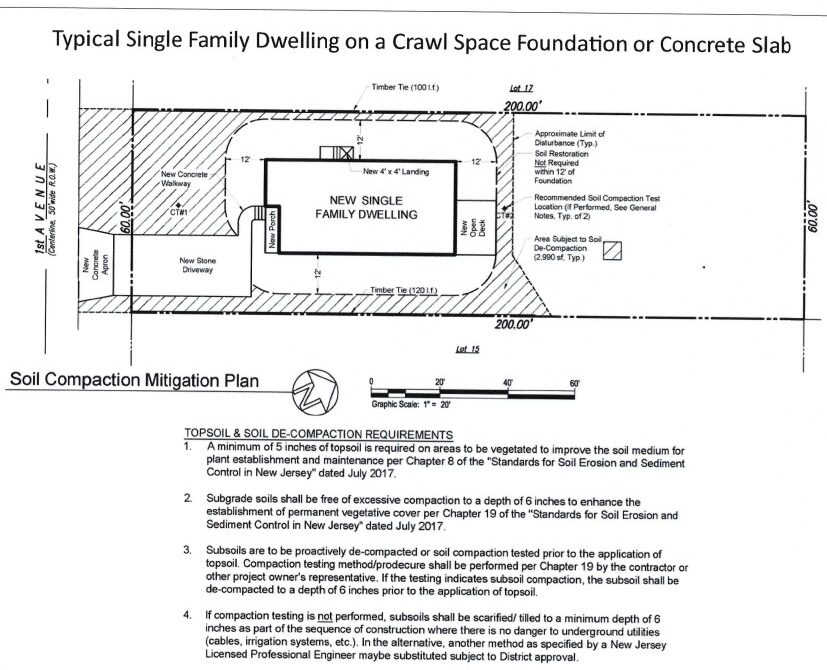
- A minimum of 5 inches of topsoil must be applied
- Subsoil must either be:
- Tested for compaction, or
- Mechanically loosened (de-compacted)
If testing shows compaction, the subsoil must be loosened to a depth of at least 6 inches before topsoil is applied.
Soil Compaction Testing
Testing is not always required but may be used as an alternative to performing full soil de-compaction.
Approved testing methods include:
- Wire probe test
- Penetrometer readings
- Bulk density testing (lab analysis)
- Nuclear densitometer testing
Testing locations must be identified on the certified plan and follow required spacing based on project size.
Exemptions
Certain site conditions and project types may be exempt from soil restoration requirements. Examples include:
- Small disturbance areas (500 square feet or less)
- Specific engineered or specialized land uses such as:
- Athletic fields
- Landfills
- Structural soils
- Areas where increased infiltration is not appropriate
Plan Requirements
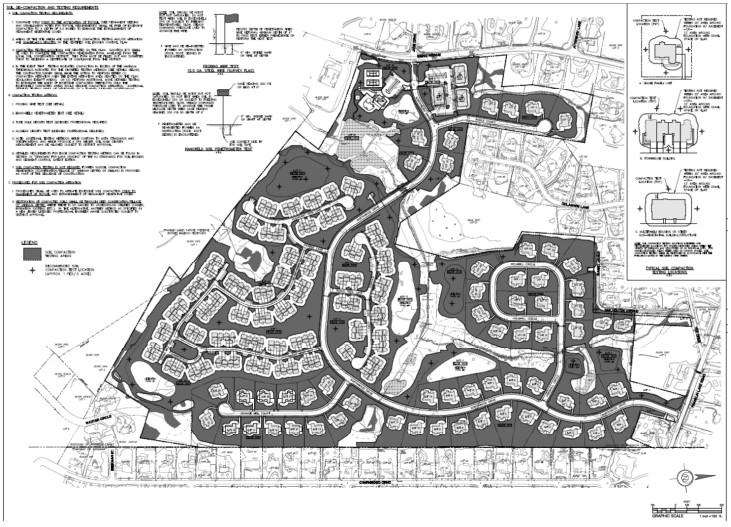
Plans submitted for certification must clearly show:
- Areas subject to soil restoration
- Locations of testing or mitigation
- Any exempted areas
This information may be included within the erosion control plan or as a separate Soil Restoration / Compaction Mitigation Plan.
Inspection & Verification Process
Before requesting a final inspection, applicants must:
- Complete soil testing or de-compaction (as required)
- Submit a Soil Compaction Mitigation Verification Form
- Provide documentation showing where testing or mitigation was performed
District staff will verify compliance during inspection. If soil conditions do not meet standards, additional work and reinspection may be required before approval can be issued.
Resources & Forms
The following resources are available to assist with compliance:
- Topsoiling Standard (Section 8)
- Land Grading Standard (Section 19)
- Soil Restoration Notes for Plans
- Soil Compaction Mitigation Verification Form
Additional guidance and downloadable materials are available through the New Jersey Department of Agriculture Soil Erosion and Sediment Control Program.