
Restoring the shoreline of a lake or pond is a powerful way to improve water quality, reduce erosion, and enhance the natural beauty of a community. As part of the Manalapan Brook Watershed Restoration Project, shoreline restoration efforts at Manalapan Lake in Thompson Park [view in Google Maps] demonstrate how strategic design and native plantings can transform degraded shorelines into healthy, functional ecosystems.
Watch the video for more information about planning, design, construction, and maintenance practices used to restore shoreline areas and protect the long-term health of the watershed.
Understanding Shoreline Erosion
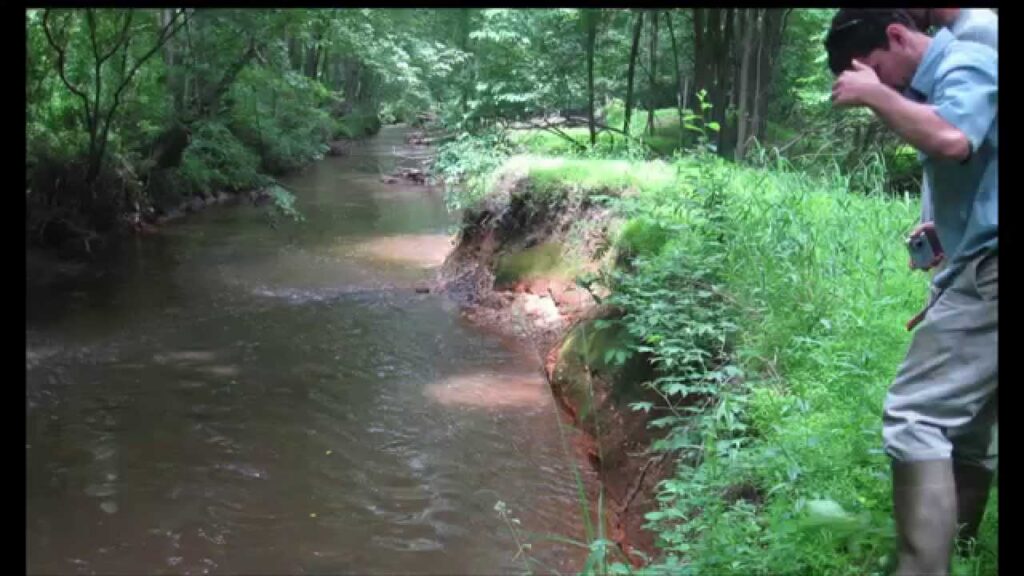
Shoreline erosion is a common problem in lakes and ponds, particularly in developed or heavily used areas. When vegetation is sparse or removed, exposed soil becomes vulnerable to:
- Wave action and ice
- Stormwater runoff
- Foot traffic and recreational use
- Canada geese grazing on shoreline vegetation
As soil erodes, sediment is carried into the water, bringing nutrients, pollutants, and debris. This leads to increased turbidity, reduced water quality, algae growth, and the gradual filling of lakes—often requiring costly dredging.
A Natural Solution: Vegetated Shoreline Buffers
Shoreline restoration focuses on installing vegetated buffers—areas of native plants along the water’s edge that stabilize soil and filter runoff.
At Manalapan Lake, restoration techniques included:
- Regrading the shoreline to create a stable slope
- Installing biodegradable erosion control materials such as bio logs
- Using temporary silt fencing to protect the site during construction
- Planting a diverse mix of native vegetation
Over time, plant roots form dense networks that hold soil in place, absorb pollutants, and create habitat for wildlife. As the restoration matures, the erosion control materials naturally decompose, leaving a self-sustaining system.
Thoughtful Planning and Design
Successful shoreline restoration requires careful planning, especially in public spaces. Projects must balance environmental goals with community use by:
- Preserving access points for recreation such as fishing and boating
- Maintaining sightlines and scenic views
- Designing around areas of frequent foot traffic
- Ensuring access for long-term maintenance
Permitting is also a critical step, as shoreline work is regulated and may require approvals from the New Jersey Department of Environmental Protection and local agencies.
Selecting the Right Native Plants
Plant selection is essential to the success of a shoreline buffer. Because shoreline areas vary from fully saturated to dry upland zones, a range of native plants must be used, including:
- Wetland species for areas near or in the water
- Transitional plants that tolerate both wet and dry conditions
- Upland plants for higher, drier areas
Native plants are well adapted to local conditions, require less maintenance, and provide valuable habitat for birds, pollinators, and other wildlife. They also help deter Canada geese, which prefer open, grassy shorelines.
Construction and Installation Considerations
Working along a shoreline requires specialized knowledge and care. Contractors should be experienced in ecological restoration and understand how to work within sensitive environments.
In areas with compacted soils from years of use, additional preparation such as soil loosening may be required to ensure successful planting and root growth. Proper installation helps set the foundation for long-term success.
Maintenance for Long-Term Success
While shoreline restoration projects are designed to be sustainable, maintenance is still important—especially during the early stages.
Key maintenance practices include:
- Protecting plantings with fencing or goose deterrents during establishment
- Removing litter and debris
- Monitoring plant health and replacing any failed plantings
- Managing invasive species before they spread
- Providing supplemental watering during dry periods
Educating the public through signage also helps build awareness and support for these projects.
A Lasting Impact on the Watershed
Shoreline restoration at Manalapan Lake is one of several strategies being implemented to improve water quality and restore ecological balance within the watershed. By stabilizing shorelines and reducing pollutant runoff, these projects contribute to a healthier, more resilient environment for both people and wildlife.
Follow the Project & Learn More
This post is part of an ongoing series documenting restoration efforts within the Manalapan Brook watershed. Return to the main project page to explore the full initiative and see how shoreline restoration fits into the broader watershed improvement strategy.
Follow the project for continued updates, restoration highlights, and practical solutions that can be applied in communities across New Jersey.
Discover more from Freehold Soil Conservation District
Subscribe to get the latest posts sent to your email.